Pop the hood.
See how Robert works

The only thing you need to do is upload the code to the AIStart Pro. But if you want to dive deeper, this page gives you a guided look inside Robert’s control system.

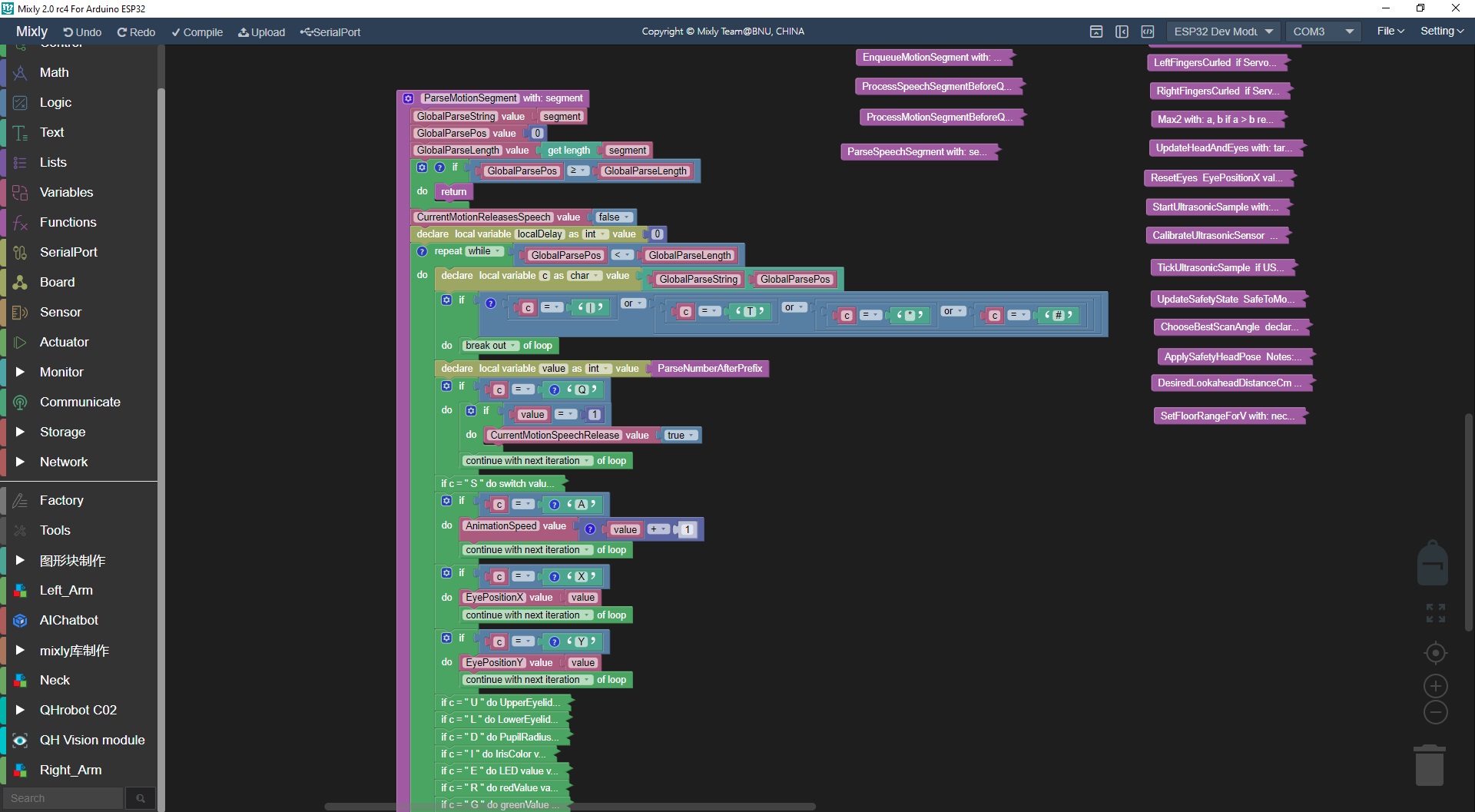
Robert is not driven by hidden magic. Under the surface is a modular, visual control system that handles AI communication, motion, speech, safety, sensor input, and expressive behavior in a way that is designed to be understandable as well as powerful.

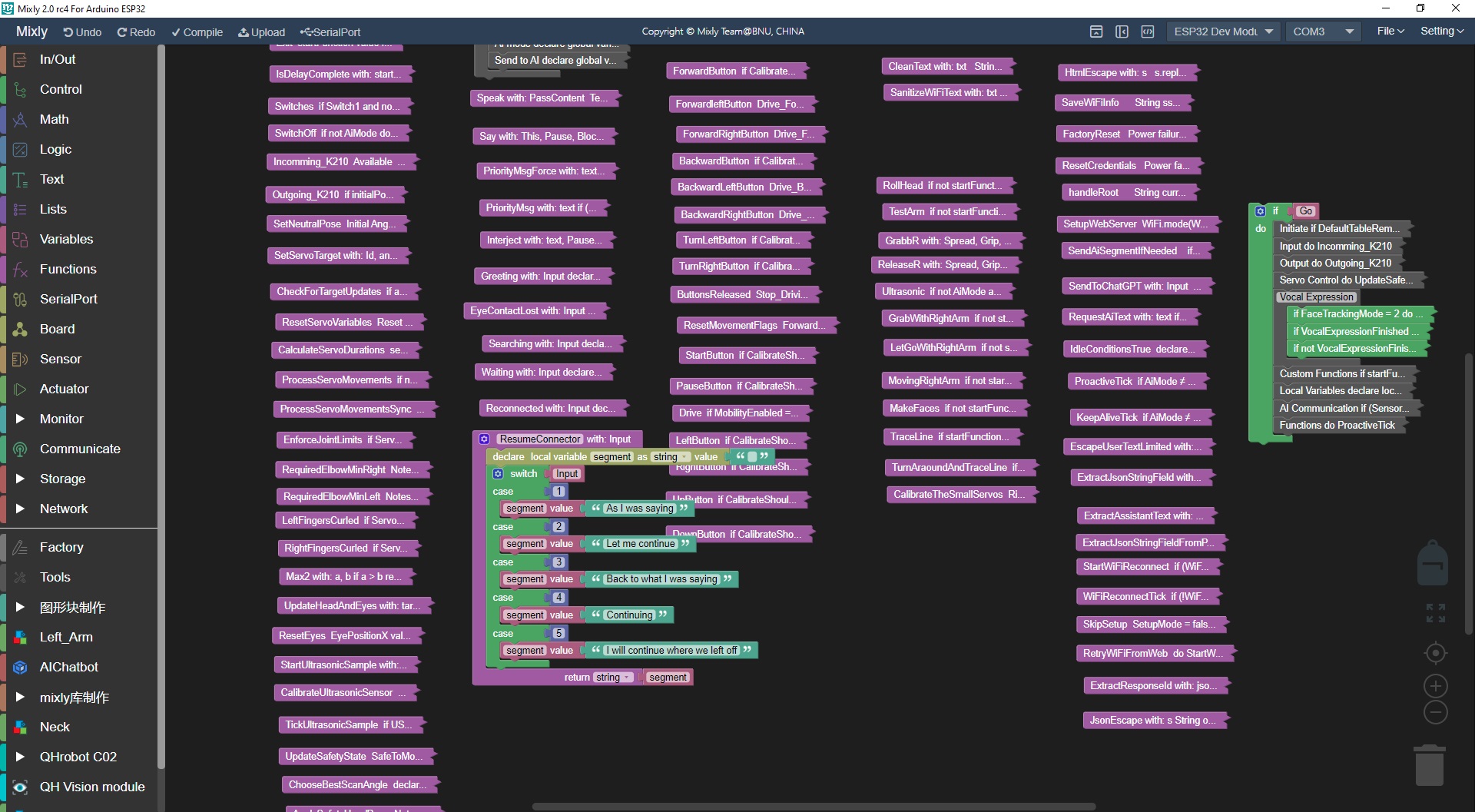
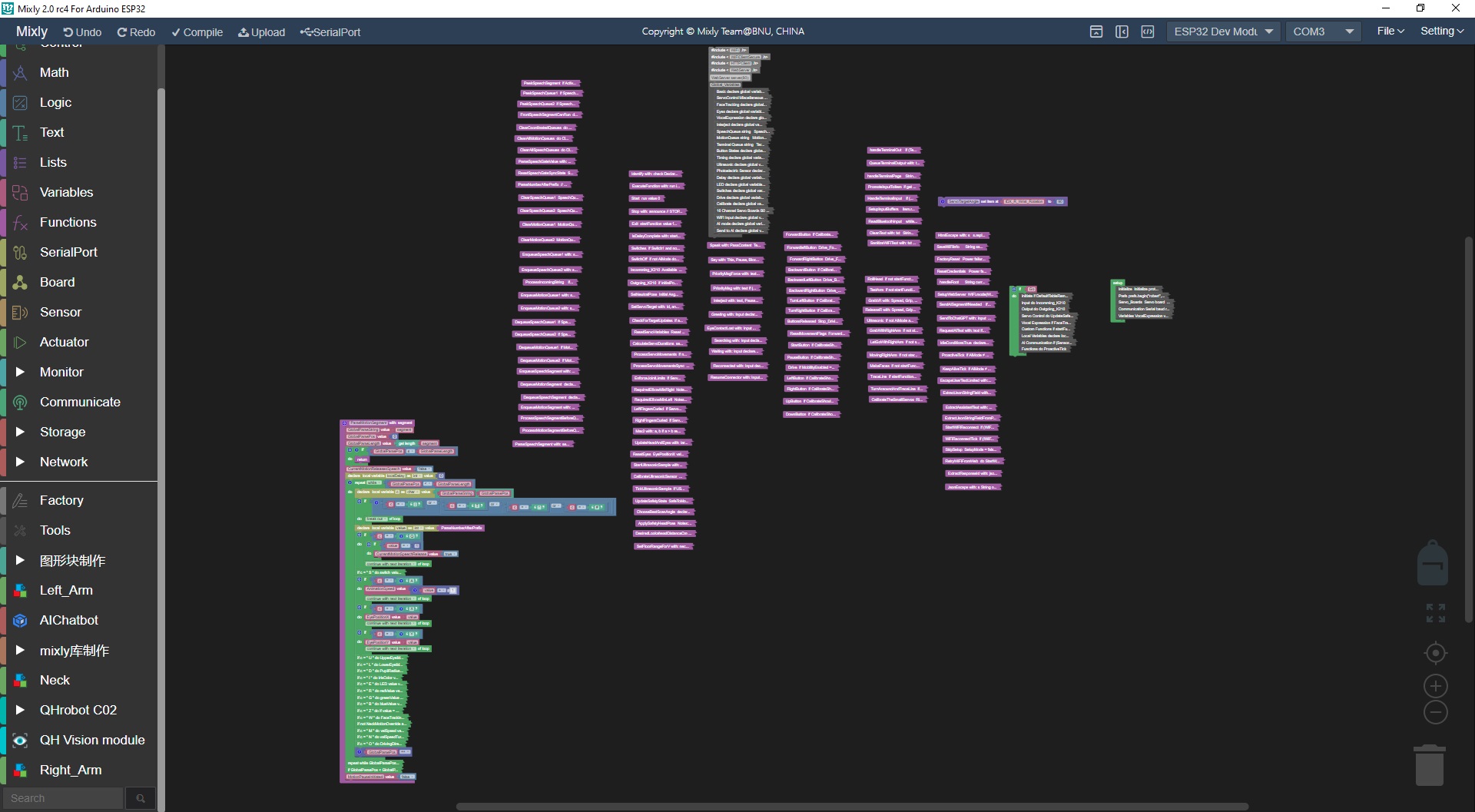
Zoomed-out overview of Robert's block-based control system
Complex engineering, made understandable

Robert’s logic is advanced, but intentionally structured so the system can be followed, modified, and expanded.

Electronics & control system

Purpose-built robotics hardware

The electronic system used in Robert is developed by QDProbot (QiHu Robotics), a company specializing in robotics controllers, servo systems, modular hardware platforms, and education.

Over time, the aim is to make it possible to source the required components directly, allowing builders to assemble their own system with minimal friction.
Visit QDProbot →

Early support

QDProbot provided early support to the project by supplying the electronic hardware used in Robert. This made it possible to explore and develop the system at a level that would otherwise have been difficult to achieve.

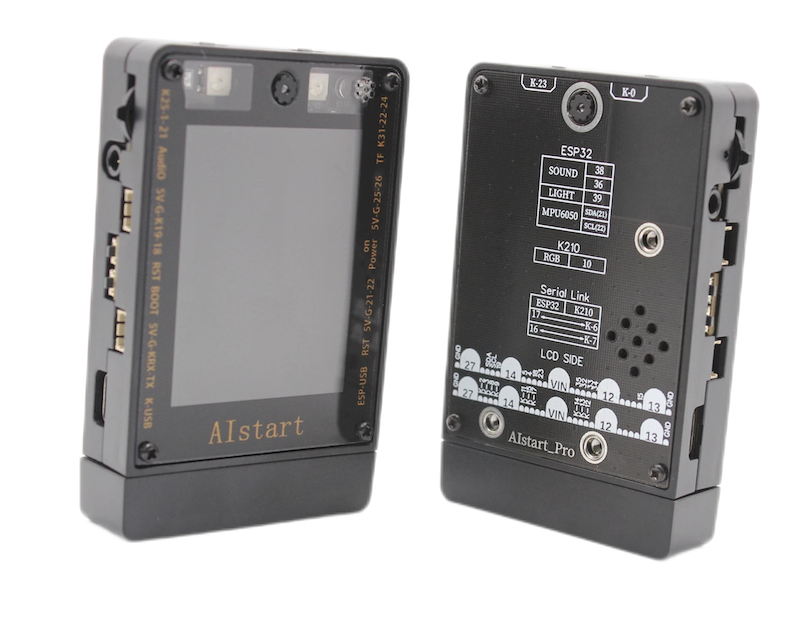
AIStart Pro controller used in Robert

AIStart Pro controller combining ESP32 and K210 for vision processing, motion control, and interaction.

You do not need to understand the code to use Robert

That is a core design goal. The internal system is complex so the outward experience can feel simpler. This page is here for people who are curious, technical, or want to understand what makes Robert different.

Transparent by design

Robert’s behavior is built from readable modules rather than buried inside a monolithic black box. The structure is meant to be understandable.

Visual, not limited

The software is developed in a block-based environment, but this is not toy logic. It supports real parsing, state handling, queue management, and safety control.

Built for growth

Robert’s control system is modular so new behaviors, sensors, expressions, and hardware configurations can be added without rebuilding everything from scratch.

The architecture of interaction

Robert is not just sending single commands to motors. The system coordinates motion, speech, timing, eye behavior, sensor input, and safety in parallel.

Dual-queue system

Speech and motion run independently, allowing more natural interaction timing.

Modular control layers

Robert’s software is separated into focused areas. That makes the whole machine easier to evolve.

AI communication protocol

Robert uses a very compact text-based protocol between the controller and the AI. This keeps communication efficient, supports structured control, and makes it possible to work across different language models.

Reflex and protection logic

Safety is integrated into the system itself. Boundary sensing, obstacle awareness, and protective motion rules help prevent damage and keep Robert inside intended operating limits.

A guided look at the software

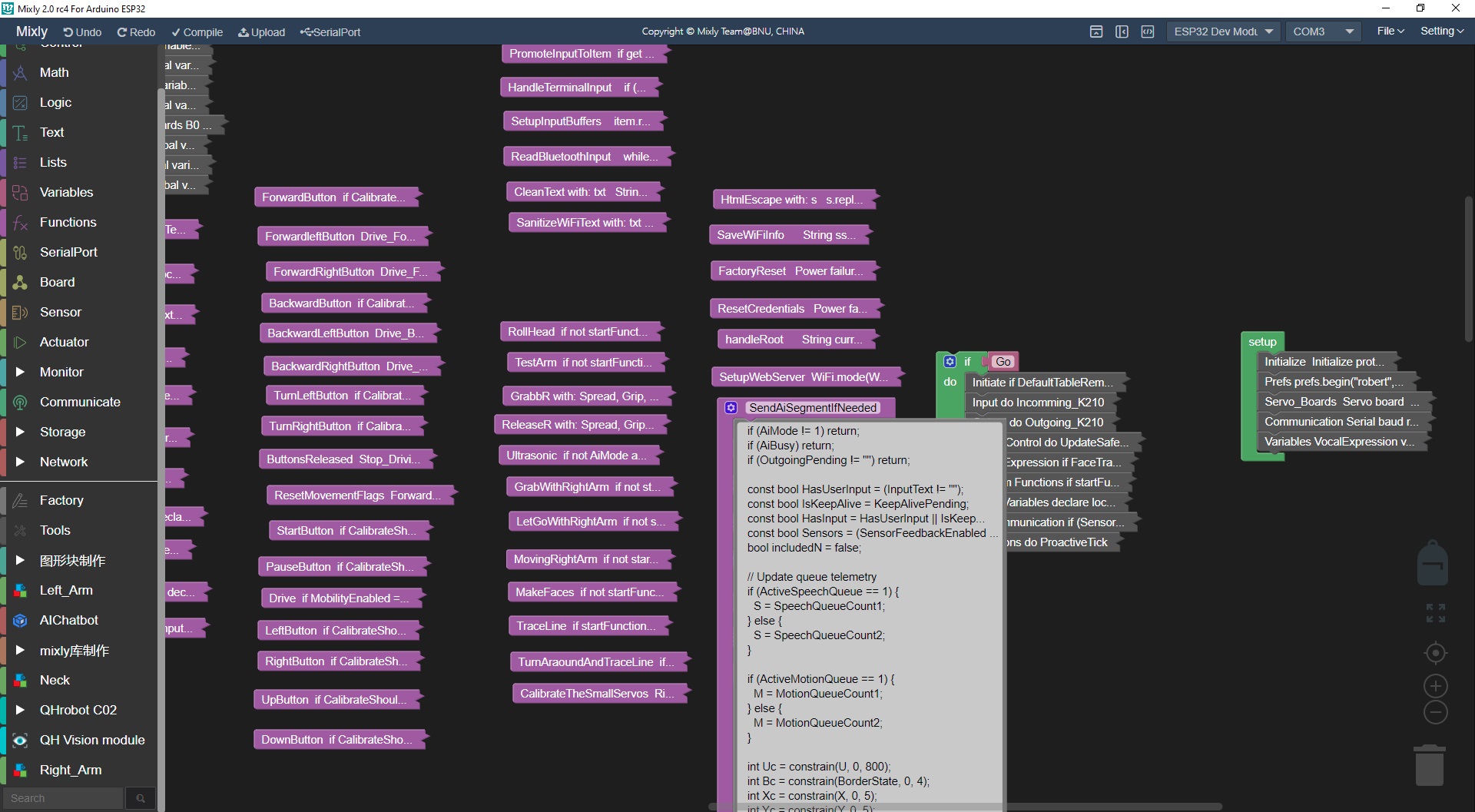
These views show how Robert’s logic is organized. They are not meant to intimidate. They are meant to show that the system is real, modular, and built with clarity in mind.

“No-code” outside, real logic inside

One of the strengths of Robert is that the underlying software can be presented visually without sacrificing depth. That means more people can inspect, follow, and eventually modify behavior without needing to dig through dense traditional code first.

Designed to be teachable

Robert is being shaped for future instructions, tutorials, and clear documentation. The software is part of that same philosophy: advanced function presented in a form that people can learn from.

Safety is not something added at the end. It is built into how Robert thinks, moves, and responds.

Safety integrated into the control system

Robert’s software tracks boundaries, movement state, sensor conditions, and interaction flow in real time. This allows the robot to react more intelligently and helps reduce the chance of conflicting or damaging behavior. The goal is not just capability, but trustworthy capability.

How a response flows through Robert

At a high level, Robert follows a clear chain from input to expression. That chain is one of the reasons the system stays understandable.

1. Input

Text, app commands, local control, and sensor events are collected and cleaned before being passed forward.

2. Interpretation

The AI receives compact context and returns structured motion and speech segments that Robert can parse reliably.

3. Expression

Motion, speech, eyes, and timing are coordinated through queues and state logic so the result feels more natural and embodied.

Why this matters

Advanced robotics often becomes difficult to understand the moment it becomes powerful. Robert is being developed with a different goal: preserve capability, but keep the logic visible, modular, and teachable.

Understandable

The software is organized so builders and developers can follow what is happening instead of treating it like a black box.

Maintainable

Focused modules make it easier to improve one part of the system without destabilizing the rest.

Expandable

New sensors, behaviors, expressions, and interaction modes can be added on top of a clear foundation.

Beyond LEGO®

Robert is built from LEGO® elements, but the principles behind it are not limited to LEGO®. The project explores mechanical ideas such as counterbalanced motion and centralized actuation that could also inform future real-world robots.

Counterbalanced limbs

Robert uses a tuned bungee system so the shoulders and elbows become close to neutral in their working range. That means the motors do not have to spend most of their strength simply lifting the arms themselves.

More useful torque

By reducing the effort needed to fight gravity, more of the motor’s torque becomes available for actual tasks such as lifting, carrying, and holding objects. The same principle could be valuable in larger real-world robots.

Less wear, longer runtime

Counterbalancing can reduce current draw, mechanical stress, and bearing load while improving battery life. In many robotic applications, that means more endurance and more practical strength without simply scaling motor size.

Robert is not only a LEGO® robot. It is a testbed for ideas that could help shape more efficient, more capable embodied AI systems in the real world.

A platform for broader design thinking

The same logic used in Robert, counterbalancing, centralized actuation, serviceable construction, modular control, and energy-aware mechanics could also inform future robots built for rescue, industry, research, or everyday assistance.

How Robert got here

The internal systems shown here were developed over time through experimentation, redesign, and public progress updates. If you want to see how the project evolved from early concepts into the current system, follow the story behind Robert.

See the journey →